Qurʾān & Tajweed
Improve accuracy in recitation, learn key Tajweed rules and build a more deliberate relationship with the Qurʾān.
Build a connected foundation in the Islamic sciences through live, structured study. Compare our separate sisters and brothers cohorts and choose the timetable you can attend consistently.
Sanatayn means “two years”
Also written Sanatain in English
Two academic years of live, part-time Islamic study, designed to create a firm foundation rather than a collection of disconnected lessons.
A clear definition
A Sanatayn course is a two-year foundation programme in Islamic studies. It is usually designed for students who want more structure and depth than occasional classes, but who are not yet ready—or may not need—to commit to a full multi-year ʿĀlimiyyah programme.
There is no single national Sanatayn syllabus. Different institutes place different weight on Arabic, Qurʾān, Fiqh, ʿAqīdah, Hadith, Tafsīr and Seerah. That makes the curriculum, teacher, weekly hours and learning outcomes more important than the course name by itself.
At Ocean of Islam, Sanatayn combines regular live teaching, guided resources and assessment. Sisters can choose weekday or weekend online cohorts, while brothers aged 16+ can choose a hybrid evening route or attend it fully online.
The destination is the same: a strong, connected Islamic studies foundation. The key difference is the weekly schedule, age group and curriculum weighting.
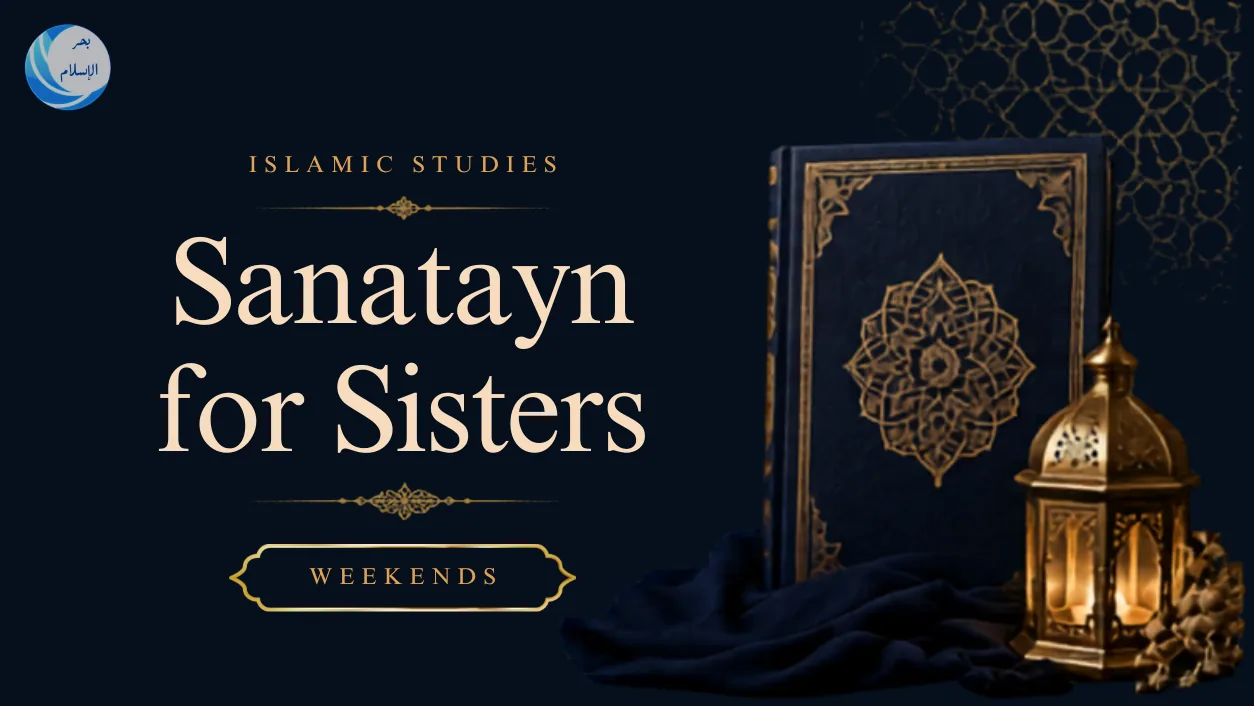
Five hours of live learning across Saturday and Sunday. Study Qurʾān and Tajweed, Arabic Grammar, Fiqh, Hadith and Seerah over two years.
View weekend curriculum, fees & enrolment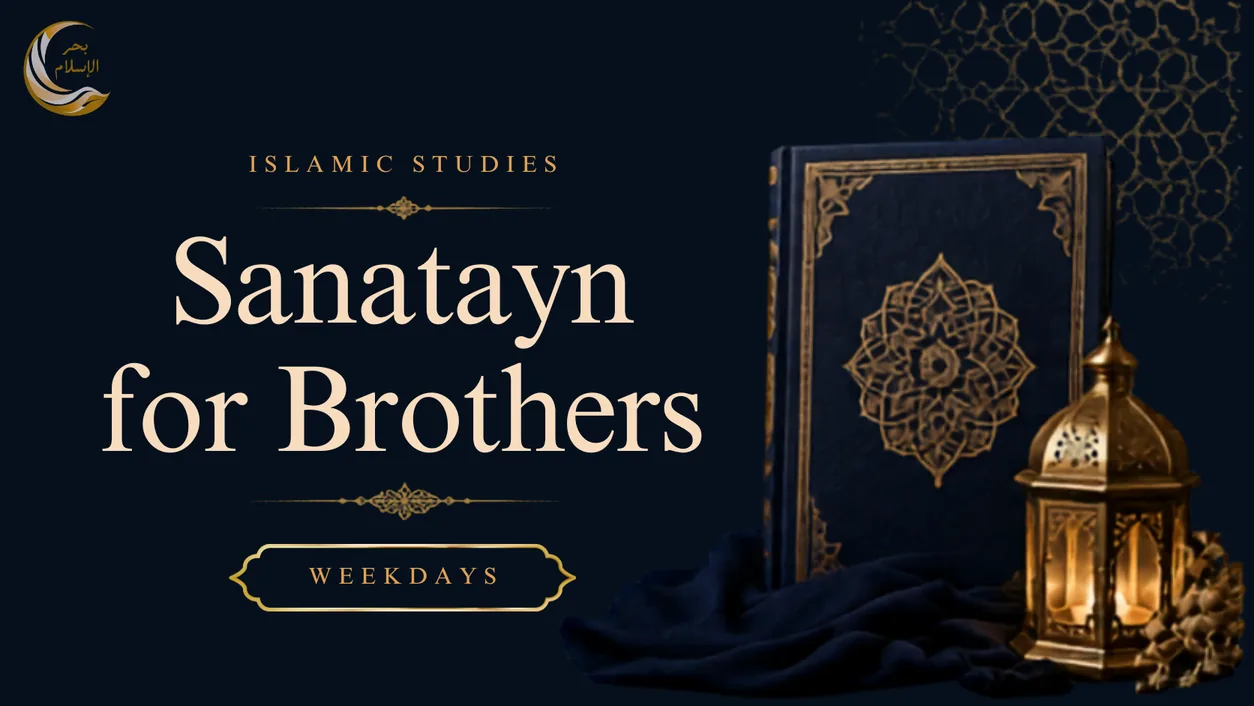
Four live hours across Monday and Wednesday. Attend Monday at SAMA Centre and Wednesday online, or attend both evenings live online.
View hybrid curriculum, fees & enrolment
Six hours of live learning across Monday, Tuesday and Wednesday. Study Qurʾān, Arabic, Fiqh, ʿAqīdah, Hadith and Sīrah in an adult cohort.
View weekday curriculum, fees & enrolmentChoose the timetable you can sustain for two years. Consistency matters more than choosing the option with the greatest number of hours.
| Feature | Weekend cohort | Weekday cohort | Brothers hybrid |
|---|---|---|---|
| Age | Sisters aged 14+ | Adult sisters aged 18+ | Brothers aged 16+ |
| Days | Saturday & Sunday | Monday, Tuesday & Wednesday | Monday & Wednesday |
| Time | 10:00–12:30 UK | 10:00–12:00 UK | Mon 8–10pm · Wed 7–9pm |
| Weekly teaching | 5 live hours | 6 live hours | 4 live hours |
| Core sciences | Qurʾān, Arabic, Fiqh, Hadith, Seerah | Qurʾān, Arabic, Fiqh, ʿAqīdah, Hadith, Sīrah | Qurʾān, Arabic, Fiqh and rotating secondary subjects |
| Delivery | Live online | Live online | Hybrid or fully online |
| Next intake | September 2026 | September 2026 | October 2026 |
The subjects reinforce one another: language supports textual study, Fiqh gives structure to worship, and Seerah and Hadith connect knowledge to Prophetic guidance.
Improve accuracy in recitation, learn key Tajweed rules and build a more deliberate relationship with the Qurʾān.
Learn foundational grammar and vocabulary that begin to unlock the language of the Qurʾān and Sunnah.
Study practical Ḥanafī rulings for purification, prayer, fasting and other areas of everyday Muslim life.
Build clarity in the foundations of Islamic belief. ʿAqīdah is a named core subject in the weekday cohort.
Read and reflect on selected Prophetic narrations, with attention to character and daily application.
Follow the life of the Prophet ﷺ in sequence and draw living lessons from the Makkan and Madinan periods.
The exact weighting and timetable differ between cohorts. See the individual course pages for the full Year 1 and Year 2 curriculum.
Who it is for
Sanatayn may suit you if you want a serious part-time route without beginning with a full-time or six-year commitment.
Research before you enrol
Learn what “Sanatayn” means, how it differs from ʿĀlimiyyah, what subjects to expect and which questions to ask any course provider.
What is a Sanatayn Course? →A Sanatayn course is a structured, two-year programme in foundational Islamic studies. Curricula vary by institution, but commonly include Qurʾān and Tajweed, Fiqh, ʿAqīdah, Hadith, Seerah, Tafsīr or Arabic. At Ocean of Islam, students follow a live timetable, complete assessments and receive a certificate when the relevant requirements are met.
Sanatayn (السَّنَتَيْن) means “two years” or “the two years” in Arabic. You may also see the term written in English as Sanatain. Both spellings refer to the same two-year format.
Not necessarily. Sanatayn is normally a two-year foundation or abridged Islamic studies programme, while a full ʿĀlimiyyah course is longer and goes into greater depth. Because institutes use the term differently, always compare the syllabus, teachers, assessment and progression route rather than relying on the name alone.
The sisters cohorts are taught live online. The brothers cohort offers Monday at SAMA Centre plus Wednesday online, or the option to attend both sessions live online.
No. We offer private sisters cohorts taught by qualified female teachers and a separate Sanatayn for Brothers cohort taught by Sheikh Yaqub Ahmed. The brothers route is for ages 16+.
No previous formal Islamic study is required. Students should be able to read the Qurʾān at a basic level and be ready to attend consistently, revise between classes and complete the relevant assessments.
Yes. Students who meet the attendance and assessment requirements receive a certificate of completion. Sanatayn provides a substantial foundation, but it should not be described as a full ʿĀlimiyyah qualification.
The sisters weekday and weekend cohorts begin in September 2026. The new brothers hybrid cohort begins on 5 October 2026, with its first teaching week free.
Compare the full course pages and choose the live schedule and cohort you can attend consistently.
Est. 2016 · oceanofislam.uk